How Conversational AI Is Transforming Internal Business Workflows Beyond Customer Facing Use Cases

Most conversations about artificial intelligence in business still revolve around chatbots that handle customer queries. That is the obvious use case, the one everybody talks about at conferences and in boardroom pitches. But something quieter and arguably more impactful has been happening inside organisations over the past few years. Internal workflows – the kind that eat up hours of employee time and rarely make it into a press release – are being reshaped by conversational AI.
For Indian businesses especially – where lean teams often juggle multiple operational hats – this shift matters. It is not about replacing people. It is about removing the friction that slows them down every single day.
The Real Bottleneck Is Not Customer Service
Here is what I have noticed across a decade of working with mid-size and large enterprises in India: the customer-facing side gets all the technology budget. Meanwhile, internal teams are still stuck passing spreadsheets over email, chasing approvals through three different tools, and manually updating records that should have been synced hours ago.
Think about your HR department. Or procurement. Or even your finance team running month-end closings. These teams lose a staggering amount of productive time on tasks that follow predictable patterns – exactly the kind of work where conversational AI fits in naturally.
The bottleneck was never a lack of willingness to adopt technology. It was the absence of tools that felt intuitive enough for non-technical employees to actually use without a training manual.
Where Internal Workflows Are Actually Changing
Let me walk through a few areas where the impact is already visible.
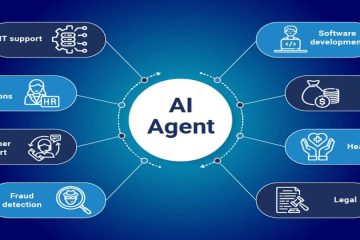
Employee onboarding is one of the first places organisations feel the difference. Instead of new hires digging through a 40-page policy document or waiting for HR to respond to basic questions, they interact with an AI-driven assistant that pulls the right answers instantly. Leave policies, reimbursement processes, reporting structures – all of it available through a simple conversation.
Then there is IT helpdesk support. Password resets, VPN troubleshooting, software access requests – these tickets pile up fast. When conversational AI handles the first layer, IT teams get their bandwidth back for problems that actually require human judgment.
Procurement and vendor management is another area that rarely gets spotlight but benefits enormously. Purchase order status checks, invoice matching queries, and compliance document retrieval – all of these follow repeatable logic that AI-powered assistants handle well.
Why Indian Businesses Stand to Gain More
India’s business landscape has a unique characteristic – rapid growth often outpaces the operational infrastructure that supports it. A startup that goes from 50 to 500 employees in two years rarely has the back-office systems to keep pace. That gap is where conversational AI creates the most value.
Multilingual capability is another factor. In a country where employees across different offices may prefer communicating in Hindi, Tamil, Bengali, or English, AI systems that understand multiple languages remove a barrier that traditional enterprise software never quite solved.
Cost sensitivity plays a role too. Indian companies – particularly in the SME segment – cannot always afford a full-scale ERP overhaul. Deploying conversational AI as a layer on top of existing systems gives them automation without the heavy upfront investment.
What Makes This Different from Regular Automation
There is a fair question here: how is this different from the workflow automation tools that have existed for years? The distinction is interaction design. Traditional automation runs in the background, following rigid rules. Conversational AI meets the user where they are – in a chat window, on a messaging app, or through voice – and adapts to the way they phrase things.
An employee does not need to know the exact field name in a database to pull up information. They just ask. That may sound like a small thing, but in practice, it is what determines whether a tool gets used or gets ignored.
Challenges That Still Need Honest Acknowledgment
No technology is a magic fix, and it would be irresponsible to pretend otherwise. Data privacy remains a genuine concern, especially when AI systems interact with sensitive employee records or financial data. Indian regulations around data handling are evolving, and businesses need to stay ahead of compliance requirements.
Integration complexity is another reality. Many Indian enterprises still run legacy software that was never designed to communicate with modern AI tools. Getting these systems to talk to each other takes planning, patience, and sometimes custom middleware.
And then there is the adoption curve. Employees who have done things a certain way for years do not always welcome a new interface – even a simpler one. Change management matters just as much as the technology itself.
Conclusion
The real story of conversational AI in business is not about replacing customer service agents with chatbots. That chapter has been written already. What is unfolding now – and what Indian businesses should pay close attention to – is the transformation happening inside the organisation. The back-office tasks, the internal support tickets, the routine queries that consume hours every week.
When those get streamlined, the impact compounds. Employees focus on work that actually moves the needle. Decisions happen faster. Operational costs come down without cutting headcount. That is the kind of transformation worth investing in – not because it is trendy, but because it genuinely changes how work gets done.



Leave a reply


-
How Conversational AI Is Transforming Internal Business Workflows Beyond Customer Facing Use Cases
Most conversations about artificial intelligence in business still revolve around chatbots that ... -
-
-
-
-