Instagram Bots vs Safe Auto DM Workflows
Many creators feel nervous when they hear the word automation. That reaction is understandable. Instagram has a long history of questionable growth tactics: fake likes, automatic follows, mass unfollows, spam comments, scraping, and tools that try to imitate human behavior in ways platforms do not want. For creators who care about their accounts, “automation” can sound too close to “bot.”
But not every automated workflow is the same. There is a major difference between fake engagement tools and intentional Auto DM workflows. A fake engagement tool tries to manufacture activity. A useful Auto DM workflow responds to real user actions: a comment, a keyword, a Story reply, an incoming DM, or a request for a link. The first creates artificial behavior. The second helps manage real audience intent.
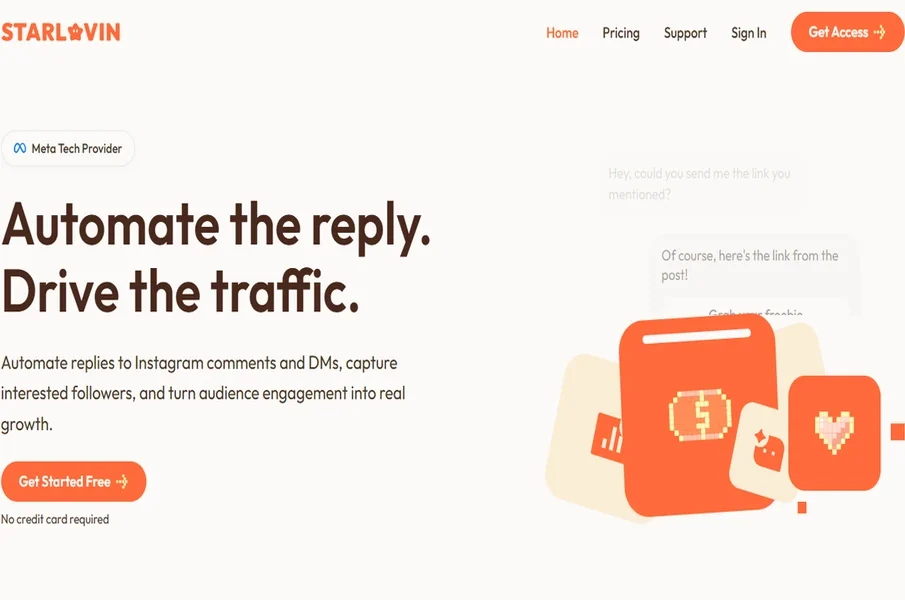
That distinction matters when explaining StarLovin. StarLovin should not be positioned as an auto-like tool, an auto-follow tool, or a gray-hat growth shortcut. Its core focus is Auto DM: helping creators respond to comments and private messages, send links or buttons, collect emails, ask for a follow before sending certain content, save contacts, and review conversations in Social Inbox.
When people worry about instagram bots, the clearest distinction is that StarLovin focuses on intentional Auto DM workflows, not fake likes or automatic follows. The workflow begins when a real user takes an action. The creator defines the message. The user receives a relevant next step.
This is also why the language around StarLovin should be careful. It is fair to say that StarLovin is a Meta-approved creator growth automation platform and that it is built around Meta’s official API. It is also fair to describe the product as focused on Instagram DM automation, comment-to-DM workflows, link delivery, email capture, follower gates, Contacts, and Social Inbox. But it should not be described as Meta-certified, endorsed by Meta, guaranteed by Meta, or a tool that can bypass platform rules.
Safe positioning depends on accuracy. A creator does not need inflated claims to understand the value. They need to know what StarLovin does and what it does not do. It does not promise fake engagement. It does not need to claim AI messaging features that are not confirmed. It should not be described as a complex audience segmentation platform or an enterprise support automation system. The actual value is simpler and stronger: StarLovin helps creators manage repeated DM actions around real engagement.
Consider a creator who posts a Reel offering a free guide. Users comment “GUIDE.” StarLovin sends a DM with the link or asks for an email before sending it. That is not fake engagement. It is a response to user intent. Another creator may ask users to follow before receiving a discount link. That is still tied to an action the user chose to take. A media account may send a full report to people who ask for it. Again, the flow begins with real interest.
This is different from tools that automatically like posts, follow accounts, leave generic comments, or pretend to be a person browsing Instagram. Those tools are risky because they create activity that users did not ask for. They can also damage brand trust. A creator who wants long-term audience growth should avoid workflows that feel deceptive or spammy.
StarLovin’s Social Inbox reinforces the difference. If a real conversation begins, a human can review the context and continue manually. That means automation does not have to pretend it understands every situation. It handles the repeatable first step and gives the creator a place to take over when judgment is needed.
Contacts also fit this practical model. When someone enters through a DM flow and shares an email, the creator can save that contact and export the list. That is useful for lead generation and audience building. But it should not be exaggerated into automatic behavioral tagging or complex segmentation unless those features are actually confirmed. Clear boundaries make the product more credible.
Creators should also explain automation to their audience in a transparent way. If a post says “comment GUIDE and I will send it to you,” the user understands what will happen. If a public reply says “sent to your DMs,” the user knows where to look. If a DM asks for an email before sending a download, the message should explain why. Transparency reduces the feeling that a bot is randomly messaging people.
The best automation feels like a helpful system behind a real creator. It does not pretend to be a human. It does not spam people who never asked for anything. It does not inflate engagement metrics with fake actions. It simply makes the creator’s promised next step happen faster and more reliably.
That is the right way to separate StarLovin from the negative idea of Instagram bots. The product is not about manufacturing attention. It is about responding to attention that already exists. A comment becomes a DM. A DM becomes a link, email capture step, follow gate, or human conversation. The creator keeps control over the message and the workflow.
For creators and small teams, that distinction is everything. Automation is not the enemy when it respects user intent. It becomes a problem only when it fakes engagement or ignores context. StarLovin’s strongest position is as a focused Auto DM tool for real social interactions, helping creators turn comments and messages into clearer next steps without pretending to be something it is not.



Leave a reply


-
Inside India’s Electric Two-Wheeler Stock Market Race
Anyone building a watchlist of the Best EV Stocks in India today ... -
-
-
-
-